Post Contents
To level up your ABM approach, tighten account selection, map the buying group, activate across coordinated channels, and measure account progression rather than lead volume alone. The best programs treat target lists as living inputs, not quarterly exports.
Key Takeaways
- Target-account coverage
- Buying-group coverage
- Meaningful account engagement
- Marketing-qualified accounts or account-stage progression
- Pipeline created and influenced from target accounts
A lot of ABM advice still sounds tidy because it skips the part where execution gets messy. Pick your target accounts. Personalize the message. Align sales and marketing. Measure pipeline. All true. None of it helpful if your lists drift, your channels operate in silos, or your measurement still collapses back into MQL thinking.
A more mature ABM program behaves differently. It treats targeting, activation, and measurement as one connected system.
Start with a living target-account list
A static target list goes stale faster than most teams admit. Buying signals change. Priorities shift. New accounts move into market while others cool off. Strong ABM teams refresh target-account lists using fit, intent, and buying context instead of assuming the same list should last all quarter.
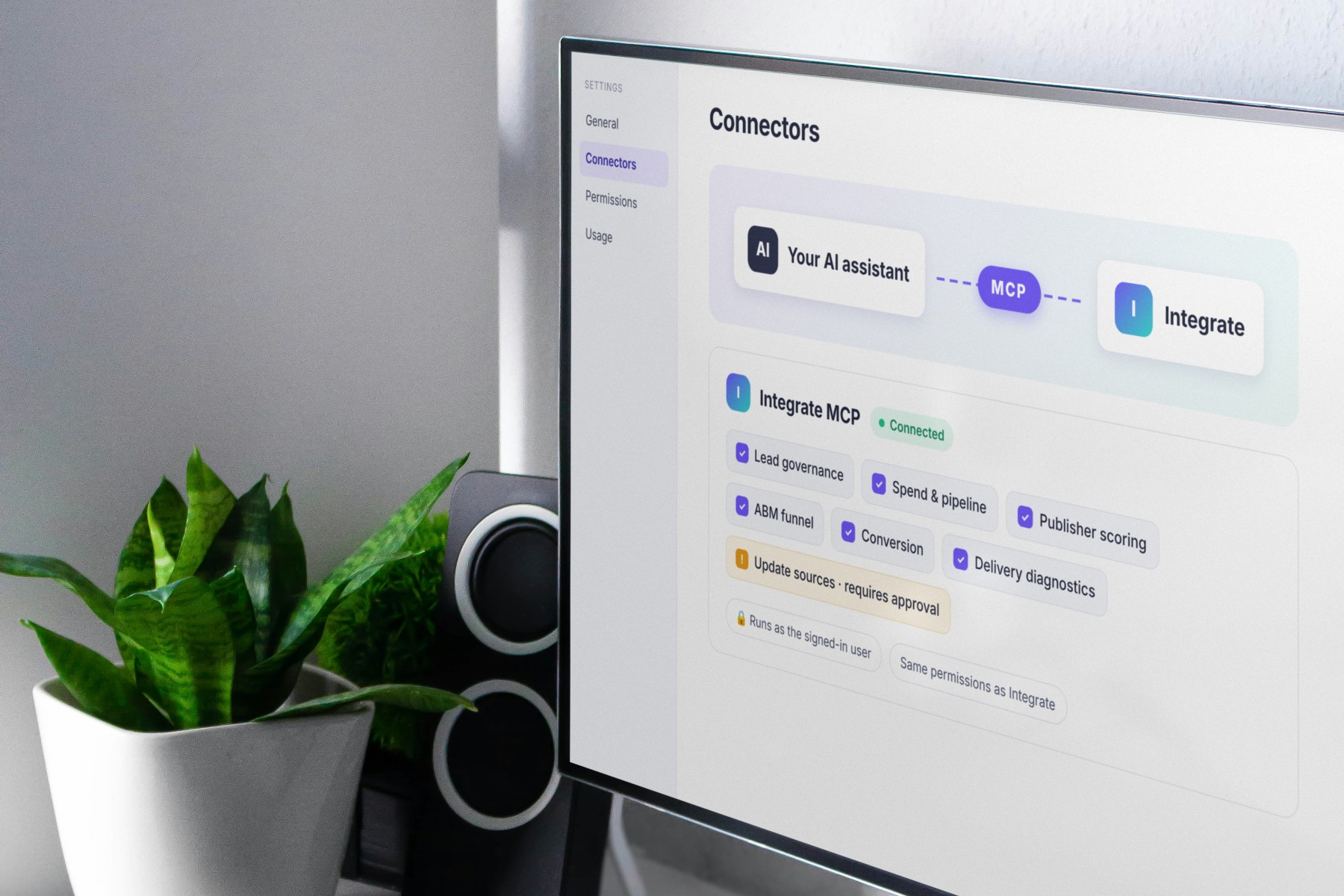
This is where account intelligence and lead governance meet. 6sense identifies in-market accounts, and Integrate complements that by syncing those segments into target-account lists and validating inbound leads against the current list before they are accepted.
Map the buying group, not just the account
An account is not a buyer. It is a container full of different people, priorities, and timing. If your ABM program is only reaching one friendly contact, you probably do not have real account momentum yet.
- Define the roles that matter in the buying committee.
- Match messaging and assets to those roles.
- Track whether engagement is spreading across the account or staying stuck with one person.
Activate across channels that reinforce each other
ABM gets stronger when each channel supports the others instead of working as separate campaigns. Paid social, account-based display, content syndication, webinars, events, and sales outreach should feel coordinated from the account’s point of view.
That does not mean every account needs every channel. It means your team should choose the right mix by tier, signal strength, and sales motion, then keep the message and follow-up connected.
| ABM maturity move | What changes |
|---|---|
| From static lists to dynamic targeting | Target accounts refresh as intent and fit change. |
| From isolated campaigns to coordinated plays | Channels reinforce each other instead of competing for credit. |
| From lead metrics to account metrics | Teams watch account progression, buying-group coverage, and pipeline quality. |
Measure account progression, not just lead volume
This is where many ABM programs quietly fall back into old habits. The reporting gets difficult, so the team returns to lead counts, CPL, and a few vanity engagement numbers. That misses the point.
- Target-account coverage
- Buying-group coverage
- Meaningful account engagement
- Marketing-qualified accounts or account-stage progression
- Pipeline created and influenced from target accounts
If you still need to prove channel performance beneath that account view, make sure the underlying lead data is clean enough to trust. Integrate sits upstream of your MAP and CRM so campaign, publisher, and source data stays governed and attributable across channels, including ABM-driven demand programs.
See it in action
To see how governed lead data supports a stronger ABM approach, book a demo.
Frequently Asked Questions
What is the fastest way to improve ABM performance?
Usually it is not more personalization. It is keeping your target-account list current and making sure activation and measurement follow the same account logic.
Should ABM replace demand generation?
No. Most B2B teams need both. Demand generation creates broad market attention, while ABM concentrates effort on the accounts that matter most.
What should ABM teams measure first?
Start with target-account coverage, buying-group engagement, and account-stage progression before you jump straight to pipeline and revenue.
About The Author