Post Contents
Trade show badge scanners are convenient because they capture attendee details fast on a busy show floor. Their weakness is what happens next. If the data arrives late, lacks context, or needs cleanup before follow-up, the scanner solved the first ten seconds of the process and left the hard part untouched.
Key Takeaways
Trade show badge scanners are convenient because they capture attendee details fast on a busy show floor. Their weakness is what happens next. If the data arrives late, lacks context, or needs cleanup before follow-up, the scanner solved the first ten seconds of the process and left the hard part untouched.
What are trade show badge scanners?
Badge scanners are lead capture tools exhibitors use to collect attendee information by scanning the barcode or QR code on an event badge. In most cases, the attendee data comes from the event organizer’s registration system, not from the exhibitor’s own forms.
That setup explains both the appeal and the frustration. Scanning is quick. The exhibitor does not need to ask someone to spell their name or enter basic details by hand. But the exhibitor also has limited control over the data structure, the speed of delivery, and the context attached to each scan.
Why do exhibitors still use them?
- They are easy to deploy at large shows.
- Booth staff can learn the workflow in minutes.
- They reduce manual entry during busy conversations.
- They are often the default option offered by the event organizer.
That convenience matters. If your booth is crowded, any method that slows reps down too much will fail in the real world, even if it looks better on paper.
Where do badge scanners fall short?
1. Follow-up is often slower than teams expect
At many events, the exhibitor does not get a fully usable list the moment a scan happens. Data may come later from the organizer, and even then it may still need cleanup and mapping before it can be routed anywhere useful.
2. The scan rarely captures enough context
A badge tells you who someone is. It does not tell you what they cared about, what problem they mentioned, whether they asked for pricing, or whether they wanted a follow-up next week or next quarter.
3. Data quality is uneven
Even when the underlying registration data is decent, event files often need standardization, deduplication, and field mapping before they fit your downstream systems cleanly.
4. Privacy and consent are not always as simple as teams assume
Registration consent, exhibitor follow-up rights, and what fields are actually visible can vary by event and region. That does not make badge scanning unusable, but it does mean event teams should be careful about assuming every scan is equally marketable.
What are the main alternatives?
| Method | Best for | Main tradeoff |
|---|---|---|
| Rented badge scanners | High booth traffic and simple contact capture | Limited context and slower post-event activation |
| Mobile lead capture apps | Teams that want scan data plus notes, qualifiers, and flexible capture methods | Requires setup and training ahead of the event |
| QR code or form-based capture | Self-serve capture, breakout sessions, and lighter-touch interactions | Completion rates depend on attendee motivation |
| Manual entry and business cards | Small events or highly targeted conversations | More effort, more inconsistency, and more cleanup later |
For many teams, mobile-first capture is the practical middle ground. You still get speed, but you also get room for qualification notes, structured follow-up fields, and more flexibility outside the booth.
How should you choose the right approach?
Choose badge scanners if
- the event organizer’s workflow is fixed
- your main goal is fast contact capture at a crowded booth
- your team can tolerate a thinner handoff and enrich later
Choose a richer lead capture workflow if
- your reps need to record next steps, product interest, or urgency
- follow-up speed is a priority
- your marketing ops team spends too much time cleaning event files afterward
- you want better reporting on event contribution, not just raw scans
Where can Integrate fit, without forcing the issue?
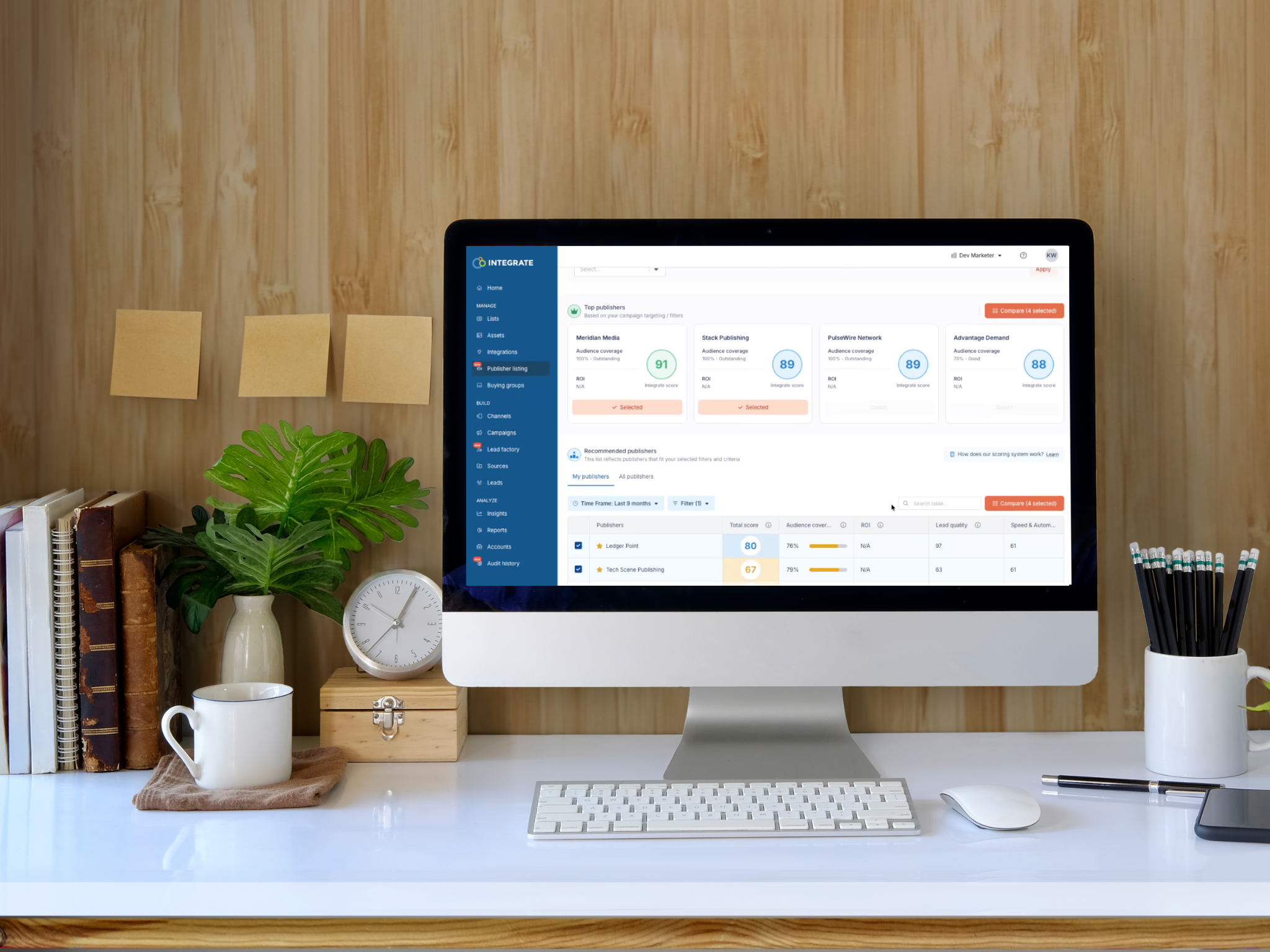
If your event program depends on booth scans, CSV exports, or mobile lead capture applications, Integrate has a current and natural role upstream of your MAP or CRM. The platform’s current field-marketing and lead-processing materials focus on ingesting event lead data, validating it against your rules, standardizing fields, routing it quickly, and giving teams visibility into accepted and rejected leads.
That matters because many event teams do not actually have a capture problem. They have an activation problem. The lead is collected, then it sits in a queue, an export, or a spreadsheet while intent fades.
Still, it is worth drawing the boundary clearly. Integrate is not the event organizer’s registration system. It is the lead management layer that helps teams activate and govern what comes out of event capture workflows.
A quick event lead capture checklist
- What information do reps need beyond name and company?
- How quickly can sales act on a good event lead today?
- How much cleanup happens after each show?
- Can you separate high-intent booth conversations from casual scans?
- Do you have a reliable way to report event quality, not just event volume?
Final thought
Badge scanners are not the enemy. They are just a narrow tool. If your event team wants better outcomes, ask a wider question than “How do we scan more badges?” Ask how you will capture context, clean the data, route it quickly, and prove whether the event created real pipeline.
Related reading: lead capture best practices for events and conferences and methods for collecting leads at trade shows.
Frequently Asked Questions
About The Author