Post Contents
A prospect fills out your LinkedIn Lead Gen Form at 9 AM. By 9:05, that lead is in Marketo, routed automatically, no spreadsheet, no manual export. You have a native integration. It’s working exactly as intended. Not exactly.
The problem isn’t getting the lead in. It’s what happens to it once it’s there. That lead arrived with a personal Gmail address, a job title LinkedIn auto-populated, and no validation against your suppression list. It’s in your nurture stream now, polluting your scoring model, skewing your attribution, and costing your sales team trust in marketing data.
Native integrations solved the routing problem. They don’t solve governance, and they definitely don’t solve attribution. LinkedIn’s Campaign Manager tells you the cost per lead. It can’t tell you which of those leads became pipeline three months later, or how social converts compared to your content syndication or event spend.
The Real Problem with LinkedIn Lead Gen
LinkedIn lead gen has become one of the most important demand generation channels in B2B, alongside Meta, offering precise targeting, high-intent audiences, and scalable form fill volume. Most marketing teams have automated the routing, native integrations that connect LinkedIn directly to MAP or CRM, but automation without governance isn’t a solution. It’s a faster way to move bad data.
Two problems persist even after automation is in place.
- No governance layer means junk gets in at speed. LinkedIn and Meta collect whatever prospects submit. Personal email addresses, fake phone numbers, leads from sanctioned countries, contacts who don’t fit your ICP at all. A native integration doesn’t filter any of it – it just routes it faster. Without a validation layer between the platform and your database, all leads flow straight through. Once junk hits the CRM, sales loses trust in marketing data and ops spends cycles scrubbing records that never should have entered the system.
- Social is invisible in cross-channel attribution. Social leads processed outside a governed pipeline don’t appear in cross-channel reporting. LinkedIn’s Campaign Manager shows form fills and cost per lead. What it doesn’t show is which of those leads converted to pipeline six weeks later, or how social performance compares to content syndication or events. When budget conversations happen, the channel without provable downstream ROI is the first to get cut, even when it’s producing your best leads.
- LinkedIn and Meta collect whatever prospects submit. Personal email addresses, fake phone numbers, leads from sanctioned countries, contacts who don’t fit your ICP at all. Without a validation layer between the platform and your database, all leads flow straight in. Once junk leads hit the CRM, sales loses trust in marketing data and ops spends cycles scrubbing records that never should have entered the system.
- Platform data doesn’t match your schema. LinkedIn sends country values, company names, and company sizes in LinkedIn’s format, not yours. Connect directly into MAP or CRM, and you’ve just inserted platform-native field values into your systems. Wrong country codes, inconsistent company size buckets, and abbreviated state names all create cleanup work for marketing ops. That job grows with every new campaign.
What Governed Social Lead Gen Looks Like
Integrate’s social channel connects LinkedIn and Meta lead gen forms directly into the same governed pipeline marketers already use for content syndication. Leads still flow automatically through a native integration between LinkedIn or Meta and Integrate, with the governance engine applied before leads are routed to your MAP or CRM. Leads arrive clean, validated, standardized and attributed.
Here’s what changes.
- Governance validates every lead before delivery. Email verification, phone validation, deduplication against existing records, ICP filtering, domain checks, suppression list enforcement. Every social lead passes through the same governance engine that protects your content syndication pipeline. Governance rejects leads that don’t meet your rules before they reach the database. Your sales team never sees them.
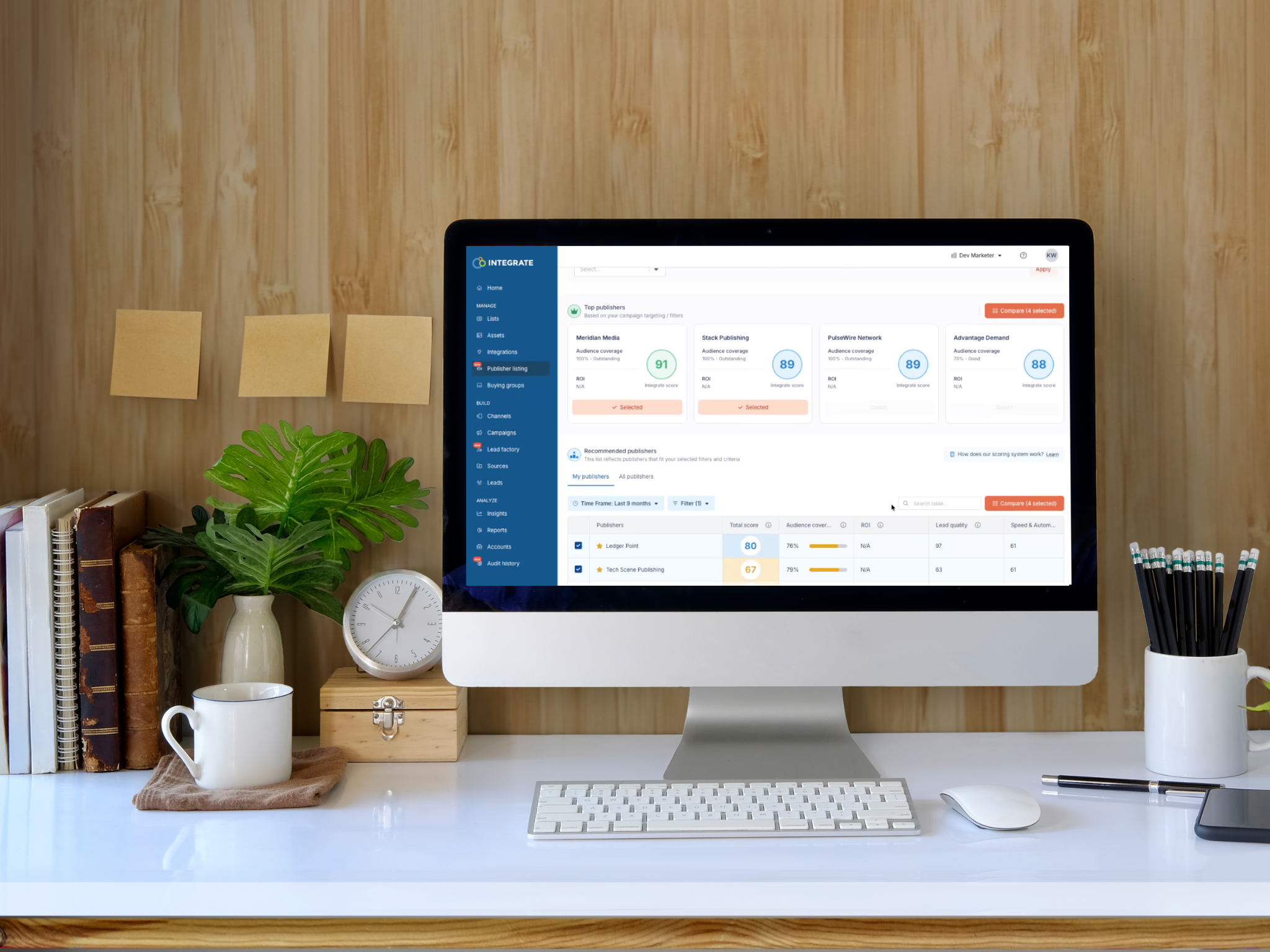
- Social performance appears alongside every other channel. With Integrate’s closed-loop integration, social campaigns show up in Performance Center next to content syndication, events, and webinars. Filter by channel, by campaign, by source. See which LinkedIn audiences convert to MQL. See which Meta campaigns drive pipeline. Compare cost per conversion across channels. When budget conversations happen, you have the data to defend social spend based on what converts downstream.
- Leads arrive in minutes. As soon as a prospect submits a LinkedIn Lead Gen Form or Meta Instant Form, the lead routes into Integrate automatically. No manual pulls. No end-of-day batch processing. The prospect is in your nurture stream before they close the browser tab.
- Your field mapping runs automatically. Integrate applies configurable field mapping and standardization rules before any record reaches downstream systems. Country values get normalized to your schema. Company size buckets match what Salesforce expects. Required fields get validated. The lead arrives MAP/CRM-ready, consistent, and immediately usable for routing, scoring, and follow-up. Marketing ops doesn’t touch it.
- Enrichment fills the gaps at ingestion. Social form fills frequently arrive with missing phone numbers, abbreviated country names, and incomplete firmographic data. Integrate’s enrichment layer appends contact and firmographic fields at the point of ingestion, before the record lands in your MAP or CRM, so leads arrive complete and actionable.
Who This Change Impacts the Most
The impact lands differently depending on where you sit.
- Marketing ops stops inheriting a cleanup job from every new social campaign. Field normalization, deduplication, and validation rules are configured once. Every lead follows the same path automatically.
- Demand gen directors can finally show social ROI the same way they show content syndication ROI. Not just form fills and CPL, but lead-to-MQL, MQL-to-SQL, and pipeline created by campaign and audience.
- Field marketers running social campaigns to promote events can see social registrations alongside event badge scans and follow-up lists in a single campaign view, without waiting for ops to merge anything.
- Marketing leadership can bring social into the same governed, measured infrastructure as every other channel, and show the board exactly how social spend converts to pipeline and revenue.
- Agencies managing paid social for multiple customers can apply each customer’s governance rules automatically at ingestion, rather than rebuilding field mappings and cleanup workflows account by account.
The Bottom Line
If your LinkedIn and Meta leads are moving through a manual export and cleanup cycle, or have a native integration with zero governance, the channel is working harder than your process allows. Integrate’s social channel connects paid social directly into your governed pipeline, so leads arrive clean, attributed, and ready to act on. Set up uses the same Integrate account and MAP/CRM integrations you already have configured. No new software, no IT tickets, no spreadsheets.
Book a demo to see how it works.