Post Contents
A B2B sales lead is a person or buying group that has shown some level of interest in your product or service and could become a customer. B2B sales leads are not one thing: they vary by source, buying stage, fit, and readiness. The practical job is to know what kind of lead you have, what it needs next, and whether the data is clean enough to move it forward.
What is a B2B sales lead?
A B2B sales lead is a person or buying group that has shown some level of interest in your product or service and could become a customer. In practice, that means a lead has entered your demand funnel through a channel such as content, webinars, events, paid media, social, list upload, partner activity, or outbound response, and now needs to be understood, qualified, and moved forward in the right way.
The point is not to collect the most leads. The point is to understand what kind of lead you have, whether it fits, and what it needs next.
What types of B2B sales leads should teams actually use?
Most teams need a simple lead-type model that tells them two things: how ready the lead is and what should happen next.
A practical way to think about lead types is below.
| Lead type | What it usually means | What the team needs to know next |
|---|---|---|
| Inquiry lead | Someone responded to a program or showed initial interest | Is this a real person, in the right account, with usable data? |
| MQL | Marketing believes the lead is worth sales attention based on fit and activity | What specific signal or threshold caused the handoff? |
| SQL | Sales believes the lead is worth active pursuit | What problem, timeline, or buying condition makes this worth working now? |
| Cold lead | Too early, too weak, or too little context | What is missing: fit, intent, timing, or usable data? |
| Warm lead | Showing meaningful engagement but not yet ready for a sales motion | What additional action or qualification signal would justify progression? |
| Hot lead | Strong fit and clear intent to act | Can the team respond fast enough and with enough context to convert it? |
The exact names vary by company. The operating principle does not. You need a shared definition for each lead type, and you need the data required to move a lead from one type to the next without guesswork.
Where do sales leads sit in the funnel?
Sales leads usually sit somewhere in a simple funnel that helps teams organize attention, even if real buying journeys are less linear than the diagram suggests.
What happens in the awareness stage?
At the top of the funnel, leads are learning, researching, and trying to define a problem. Content, SEO, social, webinars, video, and broader awareness channels usually do the work here.
What happens in the consideration stage?
In the middle of the funnel, leads are comparing approaches and narrowing options. This is where deeper content, case studies, comparison material, demos, and nurture programs start to matter more.
What happens in the decision stage?
At the bottom of the funnel, leads are trying to reduce risk, confirm fit, and make a buying decision. Sales conversations, detailed proof, technical content, offers, and stakeholder alignment matter most here.
Why does data quality matter before anything else?
Data quality matters first because bad inputs create confident, wrong downstream decisions. If the lead arrives incomplete, duplicated, noncompliant, or slow to route, your scoring, routing, follow-up, and reporting all degrade with it.
Integrate’s current position is explicit: it sits between demand generation channels and the MAP or CRM, where it validates, governs, enriches, standardizes, and deduplicates leads before they land downstream. By some estimates, as much as 40% of B2B leads contain errors of some kind.
Speed matters too. Average response times to B2B leads can run as long as 42 hours, even though responding within five minutes has been shown to make a lead far more likely to qualify, and most buyers ultimately purchase from whichever vendor responds first.
That is the wedge for this topic. Before you debate scoring models or SDR process, ask whether good leads are entering your systems clean, fast, and in a form your team can actually use.
Which B2B lead channels are most common today?
Most B2B teams generate leads from a mix of channels, and each channel tends to do a different job in the funnel.
What are webinar leads best for?
Webinar leads are usually strong for education, mid-funnel evaluation, and follow-up because the buyer gave you time, not just a click. If webinars matter in your mix, Integrate for webinars is the internal reference point for how governed webinar intake fits the broader pipeline.
What are social leads best for?
Paid and organic social can generate leads at scale and help fill out buying groups, especially when targeting is sharp. The tradeoff is that volume can hide quality problems if leads move straight into your MAP or CRM without governance. Social lead workflows are one example of why upstream validation matters before delivery.
What is content syndication best for?
Content syndication is useful for reach, awareness, and early-stage demand creation, but it also makes governance more important because data is arriving from third parties at scale. Content syndication programs are where this tradeoff is often most visible.
What are inbound and SEO leads best for?
Inbound and SEO leads are useful because they come from people already looking for answers. The catch is that intent still varies a lot by query, asset, and form quality.
What is paid search best for?
Paid search is usually closer to demand capture than broad awareness and often works best when the buyer already knows what they are looking for.
What are event leads best for?
Events create high-value interaction and often stronger intent signals, but they also create messy badge-scan files and slow follow-up when the handoff process is manual. That is why event lead capture and processing often exposes the gap between demand creation and lead readiness.
Are some lead channels better than others?
There is no single best B2B lead channel. The better question is which channel is best for a given stage, audience, offer, and buying motion. An omnichannel approach usually works better than betting everything on one source.
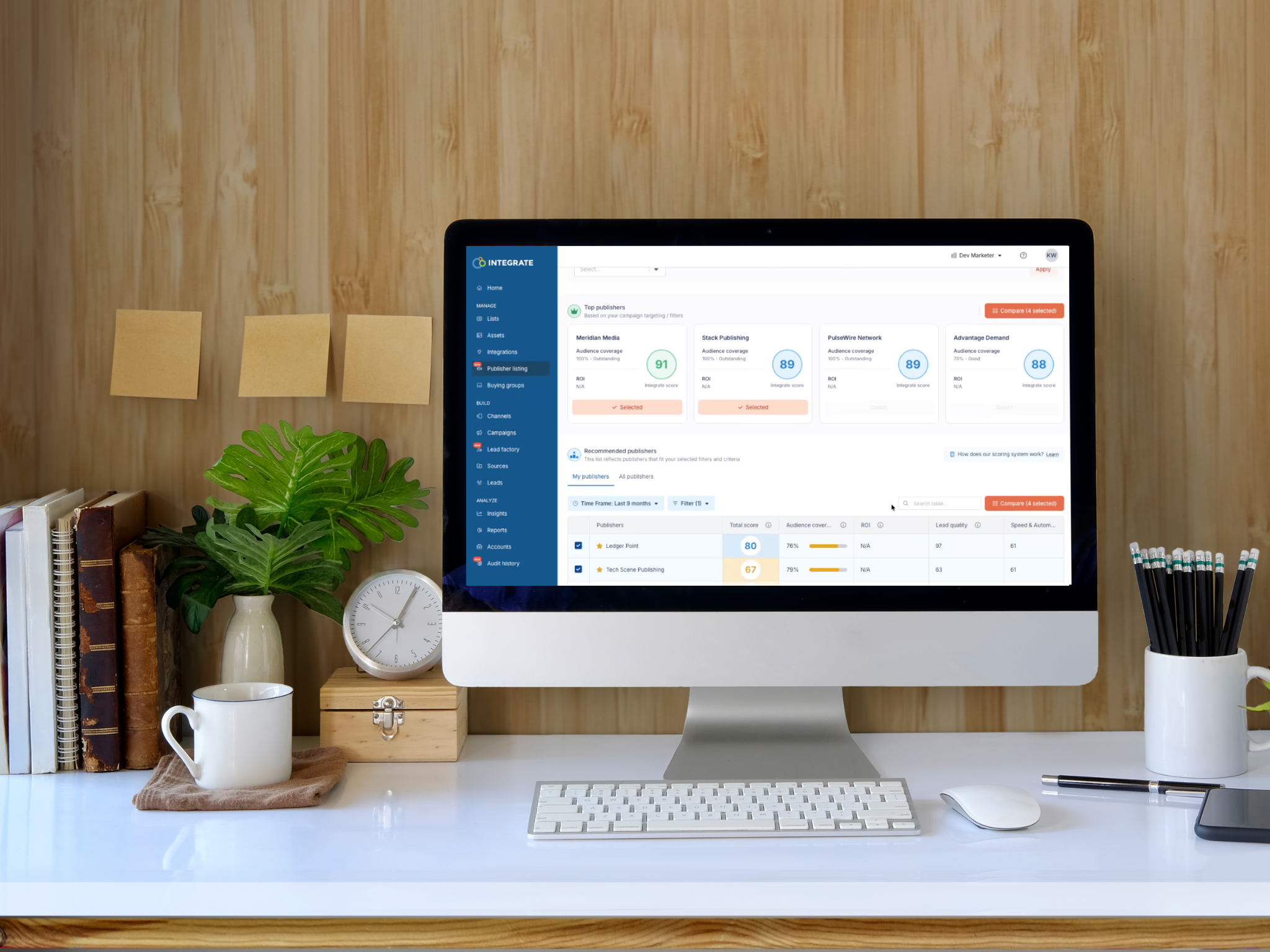
What teams often miss is that channel comparison breaks fast if each source is measured differently or if lead quality standards are inconsistent. Closed Loop sends downstream disposition updates from the MAP or CRM back into Integrate, and Conversion Insights turns that returned non-PII data into channel, publisher, campaign, and source-level conversion visibility.
That does not replace attribution platforms or CRM reporting. It complements them by giving demand teams a governed upstream-to-downstream view of what happened to the leads they paid for. If you want the product context behind that layer, see Closed Loop Attribution.
What should happen after you generate a lead?
After a lead is generated, the next job is to decide whether it is real, usable, relevant, compliant, and ready for the next step. That decision should happen before sales wastes time on it.
A simple operating checklist looks like this:
- Is the person real and contactable?
- Is the lead complete enough to route?
- Does it match the audience or account criteria for the program?
- Is there valid consent where required?
- Is it a duplicate?
- Can it be enriched or standardized before it creates downstream problems?
- What exact signal would justify moving it from inquiry to MQL, from MQL to SQL, or from SQL to active opportunity work?
That last point matters. Qualification gets much cleaner when teams know what evidence is required to progress the lead, instead of using generic score thresholds with no shared logic.
Which qualification frameworks still matter?
BANT, MEDDIC, and MEDDPICC still matter because they force teams to ask what information is needed to move a lead forward instead of confusing activity with real progression.
What is BANT good for?
BANT focuses on budget, authority, need, and timeline. It is still useful when a team needs a fast, practical way to decide whether a lead is worth deeper effort.
What is MEDDIC good for?
MEDDIC goes deeper. It looks at metrics, the economic buyer, decision criteria, decision process, identified pain, and the internal champion. It fits more complex buying motions with multiple stakeholders and more internal decision friction.
What is MEDDPICC good for?
MEDDPICC adds paper process and competition, which makes it useful when procurement, legal review, and competitive pressure can slow or change the deal path.
Why keep the fuller qualification section?
Qualification frameworks matter because they tell you what you still need to know to progress the lead. They also expose why clean intake data matters so much. If the lead record is thin, wrong, duplicated, or late, reps qualify in the dark and marketing learns very little from the outcome.
For teams that care about more than single-touch lead capture, this is also where a second verified action can matter. A form fill is not the same as meaningful progression.
How do BANT, MEDDIC, and MEDDPICC differ?
The simplest way to compare these frameworks is by the depth of information they require before a lead or opportunity should progress.
| Framework | Best for | Main question it answers |
|---|---|---|
| BANT | Simpler qualification and fast triage | Is this lead worth pursuing at all? |
| MEDDIC | Complex B2B buying motions | What has to be true for this deal to move? |
| MEDDPICC | Enterprise deals with more process friction | What could slow, block, or displace the deal late? |
The practical takeaway is not that one framework is always better. It is that teams should choose a framework that matches deal complexity and then make sure the lead data and handoff process support it.
Where does Integrate fit, and where does it not?
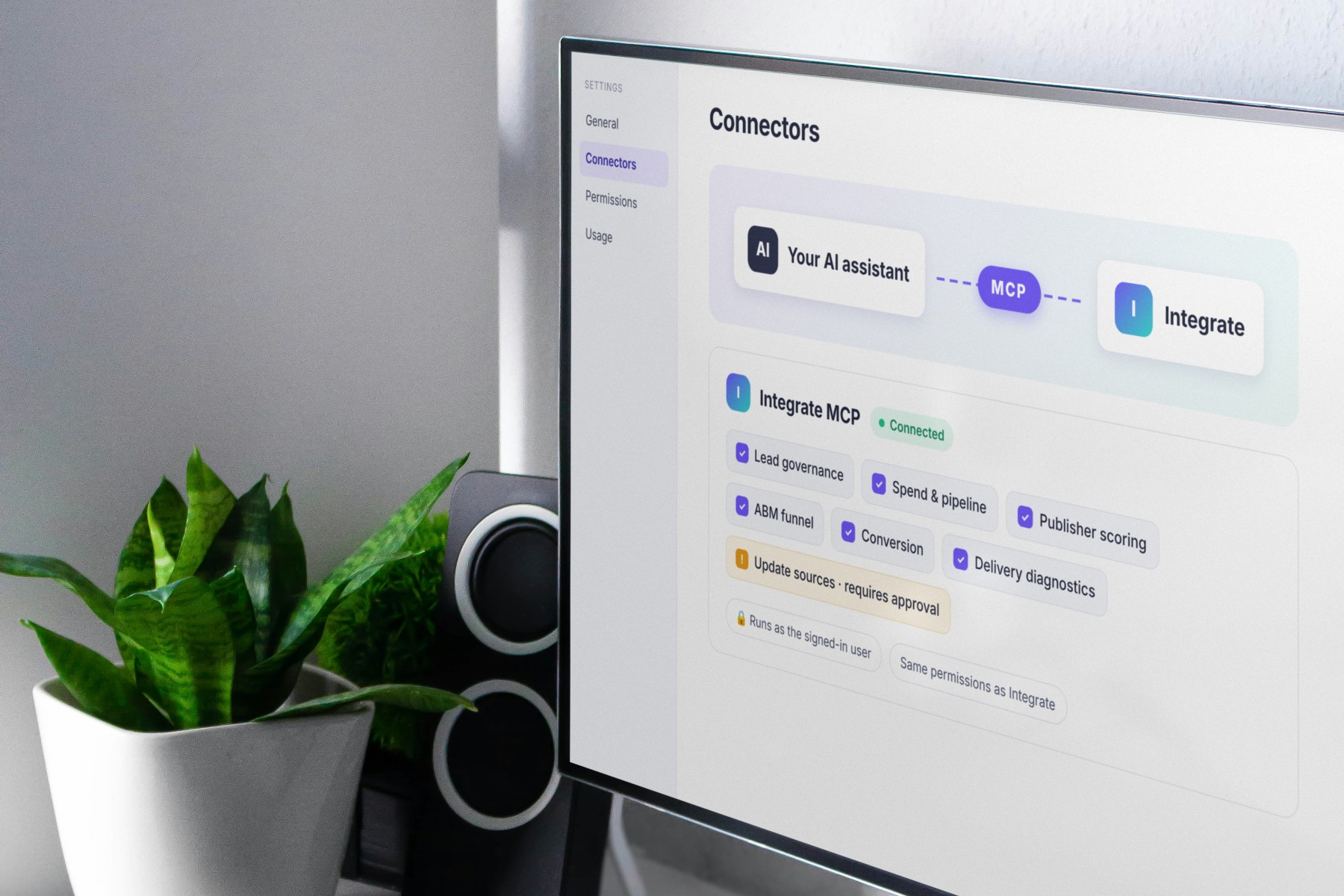
Integrate belongs upstream. Its role is to make sure every demand signal enters the MAP or CRM clean, compliant, enriched, deduplicated, and ready for action, then make downstream conversion data usable enough for marketers to improve spend decisions.
It does not replace your CRM. It does not replace sales qualification frameworks. And it should not be treated as the same thing as downstream sales process design, in-CRM routing, or attribution software. Its value is earlier and more structural: fixing the lead supply chain before bad inputs create expensive downstream mistakes.
For teams that want harder proof on channel quality, the newer closed-loop and conversion-visibility layer matters. Teams feeding downstream conversion data back into Integrate have reported outcomes such as 15% to 30% lower cost per SQL, 20% to 35% more pipeline per dollar spent, and 4 to 10 hours saved per week on manual reporting and return processing.
Final takeaway
Lead types still matter. Funnel stages still matter. Qualification frameworks still matter. But the part many teams still underrate is the condition of the lead before sales ever touches it.
If the data arrives wrong, slow, or incomplete, the rest of the system just makes bad decisions faster. If the intake layer is governed and the downstream feedback loop is visible, it becomes much easier to decide which leads deserve attention, which channels deserve budget, and what it really takes to move a lead forward.
Frequently Asked Questions
What fields should teams validate before a lead reaches sales?
At minimum, teams should validate contactability, required routing fields, account fit, consent status, duplicate status, and the source and campaign metadata needed for downstream reporting and follow-up. Examples include email validation, field-level checks, suppression matching, target account validation, deduplication, and consent verification before delivery to the MAP or CRM.
How do teams reduce response time without lowering quality?
Teams reduce response time by removing manual cleanup, standardizing data earlier, and routing only clean records downstream. The goal is not speed alone. It is fast action on leads that are usable and worth working.
How should teams think about lead scoring?
Lead scoring works best after lead data is standardized, deduplicated, and enriched. Otherwise, scores amplify noise. A practical model combines fit and intent, then pairs the score with clear progression criteria so the team knows what evidence is required to move from inquiry to MQL, from MQL to SQL, and from SQL to opportunity work.
Can marketers compare channel quality without relying only on volume or CPL?
Yes, but only if they can connect top-of-funnel leads to downstream outcomes in a consistent way. Closed Loop and Conversion Insights are built for that use case by tying dispositions such as MQL, SQL, pipeline, and closed-won back to channel, publisher, campaign, and source inside the same governed lead flow.
About The Author